
Biology
The diagram given alongside shows an endocrine gland in the human body. Study the diagram and answer the following questions :

(a) Identify the gland. Write its specific location in the human body.
(b) Label the guidelines 1, 2 and 3 shown in the figure.
(c) Name any two secretions from part 1 and two from part 2.
(d) The deficiency of which hormone causes Diabetes insipidus? How is this condition different from Diabetes mellitus with respect to the abnormal substances present in the urine.
Endocrine System
97 Likes
Answer
(a) The gland shown is Pituitary gland. It hangs from the base of the mid-brain below the hypothalamus.
(b)
- 1 → Anterior lobe
- 2 → Posterior lobe
- 3 → Hypophysial stalk
(c) Two secretions from part 1 are Growth hormone and Thyroid Stimulating Hormone.
Two secretions from part 2 are ADH and Oxytocin
(d) The deficiency of ADH causes Diabetes insipidus. Urine does not contain any glucose in this condition but in Diabetes mellitus there is glucose present in the urine.
Answered By
64 Likes
Related Questions
Given alongside is a portion from the human body showing some important structure in ventral (front) view.

(a) Where is this portion located in the body?
(b) Name the structures numbered 1-3.
(c) State one main function of each of the structures named above.
(d) Is there any duct to carry the secretions from the structure numbered 2? If so, give its name.
Given below is an outline diagram of human body showing position of certain organs.

(a) Name the parts numbered 1 to 4.
(b) What is common to all these parts in regard to the nature of their functions?
(c) Name the nutrient element which is essential for the normal working of part 2.
Human height is mainly controlled by genetic factors but hormonal secretion is also equally important in regulating the height. Study the figures given below and answer the questions that follow :
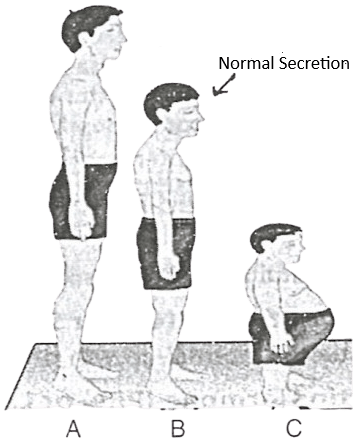
(a) Which of the above figures (A/B/C) is suffering from hyposecretion of the growth hormone?
(b) Name the disorder shown in figure A.
(c) Mention the gland which secretes 'Growth Hormone'.
Compare the hormonal response with the nervous response with respect to their speed, transmission and general nature of changes brought about.